
When "the Right to city" in Bulawayo is trampled by artisanal and small-scale mining
Increased migration into cities and towns mean greater demand for municipal services, including water and sanitation. Access to municipal services, as this piece strives to demonstrate, cannot be separated from the current artisanal and small-scale mining activities, which are common throughout Zimbabwe, especially along main rivers and streams that supply dams with water for both domestic and commercial use.
Zimbabwe has witnessed increased interest in artisanal mining over the years due to high unemployment. While efforts have been made through proclamations to ban alluvial artisanal mining, the disaster is already unfolding in different ways. It comes as an extremely sad and depressing shock that, despite two rainfall seasons with extremely above-average rainfall, Bulawayo’s supply dams still have a total capacity below 63.65% as of 18 March 2026, which threatens the city’s ability to supply its residents with clean water. Yet the national records for the country's biggest dams, as of 18 March, show a national average capacity of 92.6%. Clearly, dams supplying the City of Bulawayo are lagging behind.
"The right to city" through water provision
"The right to the city" movement, amongst some of its collective rights, campaigns for decent water and sanitation in cities. The lack of access to water in any city or town is not good news not just for ordinary residents of the city but also the business community. It scares away potential investment in industries that are key contributors to the generation of municipal revenue through the payment of various municipal rates and taxes. Bulawayo, over the past 25 years, has witnessed industries relocating to the capital city, Harare, citing, amongst other reasons, operational costs resulting from an ill-performing local economy and water woes.
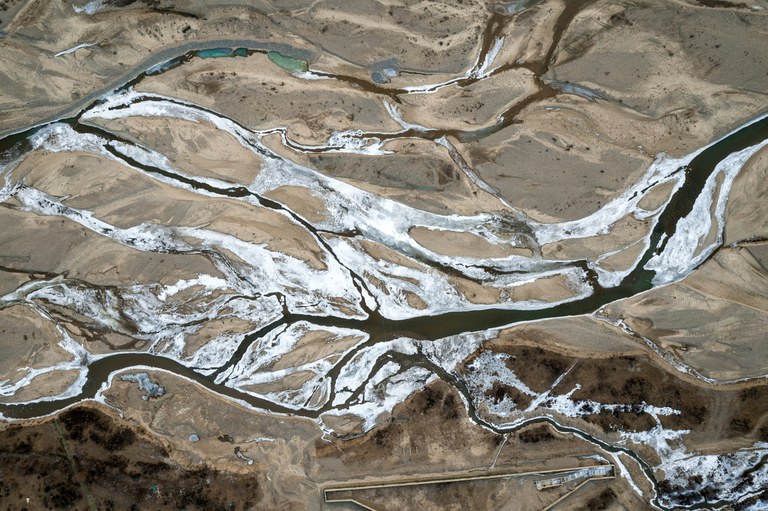
On closer inspection, the statistical update from the custodian of water resources, the Zimbabwe National Water Authority (ZINWA), dated 13 March 2026, shows that dams supplying Bulawayo lag behind other major dams in the country in their current water holding capacity. The Bulawayo City Council’s own data, reveal a cumulative percentage of 63.65% for water levels across all six supply dams, as of 18 March 2026. This is despite Bulawayo experiencing two cyclones in this current rainfall season set to end around the end of April. The three largest of the six dams that supply Bulawayo with water have a high concentration of artisanal mining along the rivers or tributary streams supplying them with water..
Artisanal mining and small-scale mining are a source of direct or indirect income for about 3 million of the Zimbabwean population. This number can easily be expanded to 25% of the entire population benefiting from artisanal mining. However, artisanal mining is one of the biggest impediments to sustainable access to water for both domestic and commercial use. Hence, it is submitted that urgent mitigation measures or a total ban of artisanal mining along river systems that supply the City’s dams are needed.
Water crisis in the City of Bulawayo
Bulawayo is located on an underground water table that is not as deep as in other parts of the country. In some parts of Harare, for example, residents can dig shallow wells to a depth of 15 meters to access water for domestic use. Residents in Bulawayo, townships likely any other township settlement in Zimbabwe are prohibited from drilling boreholes in residential yards because the size of their residential properties is less than 1000 square meters. Unfortunately, township residents in Bulawayo are not as blessed to reside on ground with easily reachable water table. To access the water table, the use of explosive dynamite is necessary to penetrate the extremely hard rock found after the first 3 to 6 meters into the ground. Most Bulawayo residents who do not have the luxury of owning boreholes languish for days, weeks or even months whenever there are water cuts. While the water cut rationing timetable has been advertised by the Bulawayo city council on its social media handles, the situation is set to get worse in the hot summer months of October, November, and December, with no guarantees of a good rainfall season in the next two rainfall seasons of 2026/2027 and 2028/2029. Despite above normal rainfall, three of the biggest dams namely lower Ncema and upper Ncema, Inyankuni and Umzingwane still have a low supply of water. The mayor prior 18 March has been continuously lamenting his concerns about uncontrolled artisanal mining near the three main dams.
Snail-paced funding for major water dam projects
Regrettably, as the supply of all dams for the city of Bulawayo is not located near the boundaries of the city, it becomes nearly impossible to monitor the situation of artisanal mining activities along rivers and tributaries feeding to the dams that supply the City of Bulawayo. At this point, it is not known exactly when the Gwayi-Shangani dam, one of major construction projects meant to alleviate water problems in the City, will be completed. Initially, the government had secured a loan deal mainly funded by a Chinese government loan through a public bank to the tune of $USD 864 million in 2012. However, funding is coming at snail’s pace, with the government chipping in here and there over the years. As of 18 February 2026, the President of Zimbabwe’s office pledged to inject 5 million US dollars every month to complete this project. These are promises yet to be seen, and at this moment, developments will be closely monitored, given that previous pledges have not led to real action from the government. This puts tremendous strain on the existing 6 dams supplying Bulawayo with water.
It is commendable that the present Mayor of the City of Bulawayo, David Coltart, has been steering efforts for contingency plans to build the Bopoma Dam at a cost of approximately $USD 100 million. This dam is planned to be located at the confluence of the Umzingwane and Insiza districts. However, the success of this project is currently being hampered by a lack of funding from key regional and international banks due to inadequate collateral, even though the government has given the city of Bulawayo the go-ahead to build the dam.
Overlapping legislative prescriptions on artisanal mining
Although the government has recently put in place more stringent measures, it is more of an enabler of artisanal mining along riverbanks or directly in rivers. Since 2016, there is an existing government policy which allows gold to be bought on a no-questions-asked basis. The policy seeks to curb the rampant smuggling of illicit gold outside Zimbabwe. Unfortunately, this policy has unintentionally encouraged illegal gold handlers to violate a number of laws, such as Environmental Management (Control of Hazardous Substances) (General) Regulations, 2018, in sections 8 and 11, which also regulate importation, sale and use of cyanide and mercury. A hazardous license is needed to trade store, sell, transport, import; export, or use a hazardous substance. Explosives Act Chapter 10:08 in sections 7,8, and 9 regulates the use, importation, and sale of dynamite. A license is needed to trade, store, sell, transport, import, or export dynamite. An explosive license is needed. The Water Act Chapter 20:24 in section 34, requires that anyone using water for mining purposes to apply for a permit. The Environmental Management (Control of Alluvial Mining) (Amendment) Regulations, 2024 (No. 3), in section 3, bans prospecting for alluvial deposits in or along any river or public stream. The Environmental Management Act [Chapter 20:27], states that mining cannot be done without submission of an Environmental Impact Assessment Report.
Artisanal mining: The enabler of water crisis
Artisanal mining is an indirect enabler of worsening inequalities in cities through erratic water supplies, which disproportionately affect the poor residing in townships. Residents end up having to get water from designated water pumps. These water pumps are sometimes more than 2km from where some households reside, or from mobile truck water bowser trucks. Besides erratic water supplies linked to illegal artisanal mining stream diversions and heavy siltation of key dams, it is feared that the amount of mercury and cyanide washed into the dams from artisanal activities is very high. This poses significant risks to a safe and healthy environment.
How to address the problem?
The above discussion has demonstrated that artisanal and small-scale mining is a growing problem that is adversely affecting access to water by residents and the business community in the City of Bulawayo. Against this background, I propose a number of options to deal with this crisis:
- The military and the police be deployed to jointly patrol all the major rivers and tributaries feeding into Bulawayo’s city dams.
- The Government must ensure that the Environmental Management Agency is sufficiently funded to ensure that it carries out its responsibilities effectively.
- Closer cooperation between the national government and the City of Bulawayo is required to ensure that the Gwayi-Shangani and Bopoma dams are completed without further delay to guarantee the City’s access to sustainable water resources.
- The government must relook at its policy of buying gold on “no-questions-asked basis, as this is encouraging artisanal mining at the expense of environmental sustainability.
By Dr Hoitsimolimo Mutlokwa, Post Doctoral Fellow at Mineral & Energy Resources Law in Africa, Department of Private Law, Faculty of Law, University of Cape Town