
The limits of municipal expropriation powers in addressing housing shortage: City of Tshwane v Summer Season Trading
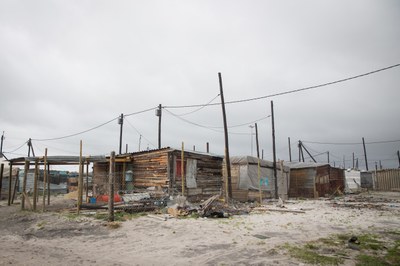
Decades after the advent of democracy, a significant portion of the population continues to live in informal settlements, characterised by overcrowding, insecurity, and limited access to basic services. Rapid urbanisation has exacerbated this crisis, placing immense pressure on municipalities tasked with providing adequate housing. The reality is stark: for many South Africans, unlawful occupation of land is not a matter of choice, but of necessity.
The case of City of Tshwane Metropolitan Municipality v Summer Season Trading 63 (Pty) Ltd (2026) brings these tensions into sharp focus. At its core, the dispute is about more than land; it is about survival, dignity, and the competing demands of legality and social justice. The City of Tshwane sought to expropriate privately owned land occupied by the Kanana community in Bronkhorstspruit in an attempt to regularise the settlement and prevent eviction. However, the Supreme Court of Appeal (SCA) rejected this effort, holding that the municipality’s actions were unlawful.
This judgment raises critical questions about the role of law in addressing housing inadequacy. This article argues that, while the SCA was correct in curbing unlawful municipal conduct, its reasoning reflects a cautious, and arguably restrictive, approach that may hinder innovative responses to South Africa’s housing crisis.
Expropriation as a tool for housing justice
Expropriation has long been viewed as a potential mechanism for addressing inequality in land ownership and improving access to housing. Section 25 of the Constitution explicitly recognises land reform as part of the public interest, suggesting that expropriation can play a transformative role in redistributing land and resources. In theory, therefore, municipalities should be able to use expropriation to address situations where vulnerable communities occupy land out of necessity.
In the Kanana case, the City of Tshwane attempted to use expropriation for precisely this purpose. Rather than forcibly removing residents from land they had occupied for years, the municipality sought to formalise the settlement and provide a more stable and dignified living environment. This approach, at least in principle, aligns with the constitutional commitment to human dignity and the right of access to adequate housing.
However, the SCA rejected this approach, not because expropriation for housing purposes is inherently illegitimate, but because of the manner in which it was pursued. The Court’s decision highlights a crucial limitation: expropriation must comply strictly with legal and procedural requirements. While this insistence on legality is understandable, it also raises concerns about whether the law is sufficiently flexible to respond to urgent socio-economic needs.
Property rights versus housing rights
One of the most contentious aspects of the judgment is its treatment of the relationship between property rights and the right to housing. While the Constitution seeks to balance these rights, the SCA’s reasoning appears to favour property rights, at least in this context.
The Court emphasised that private property owners cannot be expected to tolerate unlawful occupation indefinitely. This position is consistent with established legal principles and reflects the legitimate interests of property owners. However, it also raises concerns about the extent to which the law protects vulnerable communities who have no viable housing alternatives.
Section 26 of the Constitution imposes a duty on the state to progressively realise the right to housing. In cases such as Grootboom and Blue Moonlight, the Constitutional Court has underscored the importance of meaningful engagement and the provision of alternative accommodation. While the SCA acknowledged these obligations, its judgment places the primary responsibility on the municipality to relocate residents, rather than exploring whether expropriation could form part of a lawful solution. This approach may be seen as conservative, prioritising established property norms over transformative possibilities. In doing so, it arguably limits the potential for creative legal solutions to address the housing crisis.
Misplaced reliance on outdated expropriation frameworks
A critical weakness in the City of Tshwane’s case lies in its reliance on outdated and ill-suited legal frameworks, namely the Local Government Ordinance (Transvaal) No. 17 of 1939 and the Expropriation Act 63 of 1975, rather than grounding its actions within the more appropriate constitutional and statutory framework provided by the Housing Act 107 of 1997, particularly section 9. This strategic misstep significantly undermined the municipality’s legal position before the SCA.
The Local Government Ordinance is a pre-constitutional instrument that does not reflect the transformative ethos of South Africa’s current constitutional order. Its provisions were designed for an administrative system that predates the Bill of Rights and, consequently, lack the normative guidance necessary to balance competing constitutional rights such as property rights and socio-economic rights. By invoking this outdated legislation, the municipality effectively framed the dispute as a narrow administrative matter of expropriation, rather than a complex constitutional issue involving housing rights, dignity, and equality.
Similarly, reliance on the Expropriation Act further weakened the municipality’s position. Although still applicable in certain contexts, the Act is widely acknowledged as being out of step with the Constitution, particularly in its limited engagement with socio-economic rights and its failure to fully integrate the transformative objectives of section 25. The Act primarily regulates the procedural aspects of expropriation and compensation, but does not provide a sufficient framework for addressing broader housing challenges or the needs of vulnerable communities occupying land unlawfully. By relying on this legislation, Tshwane adopted a procedural strategy that was substantively inadequate.
In contrast, section 9(3)(a) of the Housing Act provides a far more appropriate and constitutionally aligned framework for addressing the issues raised in the Kanana dispute. This provision clearly statees as follows:
A municipality may by notice in the Provincial Gazette expropriate any landrequired by it for the purposes of housing development in terms of any national housing programme, if—
(i) it is unable to purchase the land on reasonable terms through negotiation with 25 the owner thereof,
(ii ) it has obtained the permission of the MEC to expropriate such land before the notice of expropriation is published in the Provincial Gazette; and
(iii) such notice of expropriation is published within six months of the date on which the permission of the MEC was granted.
Had the City of Tshwane grounded its actions in section 9, it could have framed its intervention not merely as an act of expropriation, but as part of a broader constitutional obligation to realise the right to housing. This would have allowed the municipality to present a more coherent and persuasive argument, linking its proposed actions to its statutory duties under the Housing Act and its constitutional obligations under section 26. It may also have strengthened its position by demonstrating that expropriation, if properly executed, formed part of a comprehensive housing strategy rather than an ad hoc response to litigation pressures.
Moreover, reliance on the Housing Act would have required the municipality to demonstrate reasonableness, planning, and procedural fairness in its approach, elements that were notably lacking in this case. The SCA’s criticism of the municipality’s conduct suggests that the expropriation was not part of a well-considered housing programme, but rather an attempt to circumvent an existing eviction order. By failing to anchor its actions in the appropriate legislative framework, Tshwane inadvertently reinforced the perception that it was acting opportunistically rather than systematically.
Towards a balanced approach
The central challenge highlighted by this case is the need to strike a balance between competing constitutional imperatives. On the one hand, the rule of law and property rights must be protected. On the other, the state must fulfil its obligation to ensure access to adequate housing.
Achieving this balance requires more than judicial intervention. It calls for legislative reform, policy innovation, and improved governance. The legal framework governing expropriation and housing must be clarified to provide municipalities with greater certainty and flexibility. At the same time, safeguards must be maintained to prevent abuse of power and protect the rights of property owners.
Importantly, there is a need to move beyond reactive approaches and focus on prevention. Early intervention in informal settlement formation, coupled with meaningful community engagement, can reduce the need for contentious measures such as eviction or expropriation.
Conclusion
The case also highlights significant shortcomings in municipal governance. The City of Tshwane’s attempt to expropriate the land can be seen as a reactive measure, taken in response to years of inaction and failure to provide alternative accommodation as required by the 2013 eviction order.
This raises important questions about accountability. Municipalities are constitutionally mandated to plan and implement housing programmes in a proactive and sustainable manner. The reliance on expropriation in this case suggests a lack of effective long-term planning and coordination. Rather than addressing housing needs at an early stage, the municipality allowed the situation to escalate into a complex legal dispute. The SCA’s judgment serves as a warning to municipalities that they cannot rely on ad hoc measures to resolve housing challenges. Instead, they must develop comprehensive strategies that balance legal obligations with social realities.
By Prof Paul Mudau, Associate Professor, Department of Public, Constitutional and International Law, University of South Africa.