
The role of Traditional and Khoi-San leaders in the integrated development planning process

This article presents the results of a study which examined the role of Traditional and Khoi-San leaders in supporting effective and efficient integrated service delivery through integrated development plans (IDPs).
Integrated development plans are key municipal planning tools that should reflect community needs and guide resource allocation. They ensure that development projects are locally relevant, participatory, and aligned with the National Development Plan, 2030.
The study sought to understand the challenges encountered by the Traditional and Khoi-San leaders in the IDP process; unpack the strategies pivotal in creating a conducive environment for the Traditional and Khoi-San leadership to play an instrumental role in the formulation of IDPs; and provide recommendations, instrumental for the effective and efficient participation of the Traditional and Khoi-San leadership in the IDP processes.
The study used a mixed-method approach, examining case studies on the conflict between traditional leadership and local government. Participants included 28 traditional leaders from Limpopo, 27 from Mpumalanga, and 31 from the Eastern Cape. Data was collected through questionnaires, interviews and focus group discussions with selected officials of the Department of Traditional Affairs.
Findings
The constitutional and legislative framework recognise the role of traditional leaders in local government. This framework empowers traditional leaders to promote community development through effective community involvement. Despite the existence of this framework, several challenges confront traditional leaders when participating in municipal IDP process. The challenges include the tension between the institution of traditional leadership and the three spheres of government; role ambiguity and role conflict with ward councillors; limited understanding of IDP processes and technical planning knowledge; and inadequate communication and cooperation between traditional leaders and municipalities.
a) Role ambiguity and role conflict with ward councillors
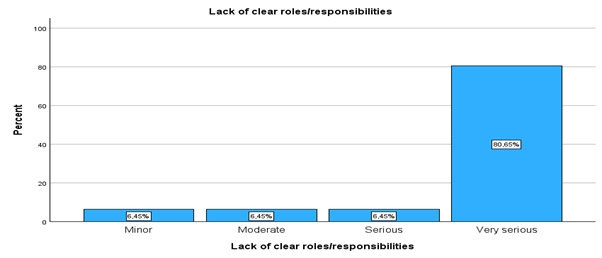
Graph 1 illustrates participants' views on the impact of unclear roles and responsibilities on traditional leaders' involvement in municipal processes.
Graph 1: Lack of clear roles and responsibilities
An overwhelming 80.65% considered the issue extremely serious, highlighting role ambiguity as a major barrier to effective participation in municipal planning and service delivery. Only a small percentage (6.45% each) rated the problem as minor, moderate, or serious, indicating a consensus on the issue.
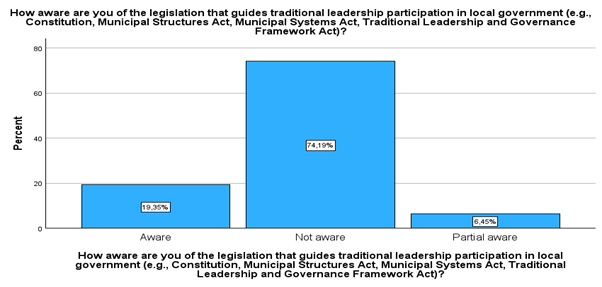
Graph 2 displays the awareness of and clarity on legislation guiding traditional leadership’s participation in the IDP process.
Graph 2: Awareness of legislation guiding traditional and Khoi-San leadership participation
Participants’ knowledge of the laws governing the role of the institution of traditional leadership in local government reveals a significant gap, as shown in Graph 2. A majority (74.19%) of participants are unaware of the relevant legislation, while 6.45% have partial awareness and only 19.35% report being fully aware. This lack of legal literacy may hinder traditional leaders in managing their engagement with municipalities and participating effectively in planning processes.
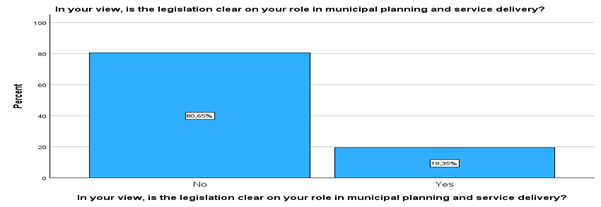
Graph 3 displays the participants’ views on whether their roles are clarified in the legislative frameworks.
Graph 3: Clarity of legislation on traditional leaders’ role
Graph 3 shows that 80.65% of participants believe their roles in municipal planning and service delivery are unclear due to vague legal frameworks, while only 19.35% think the law is clear.
Graph 4 highlights poor coordination between traditional leaders and municipal officials, indicating that ineffective cooperation hinders community participation in municipal planning.
b) Poor coordination between traditional leaders and municipal officials
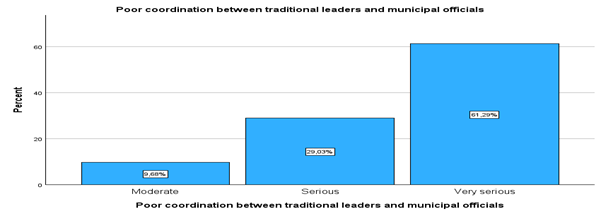
The results reveal a significant gap in collaboration, with 61.29% of participants viewing the issue as extremely serious and 29.03% considering it serious. Only 9.68% rated it as moderate, demonstrating that coordination problems significantly impact participatory planning and cooperative governance.
Strategies to enhance effective participation in the IDP process
- Formalise roles in municipal planning: Clearly define and incorporate the roles of Traditional and Khoi-San leaders in local development planning processes, such as the IDP and the District Development Model (DDM), the latter being a whole-of-government approach to improve service delivery.
- Ensure adequate support: The Department of Traditional Affairs, SALGA, provincial COGTAs and other stakeholders, such as, the Development Bank of Southern Africa should consider providing resources and mechanisms that enable traditional leaders to contribute fully to local governance and development initiatives.
- Integrating governance structures: Traditional leaders, through their Local Houses, must collaborate with official government systems to improve decision-making and service delivery.
- Strengthen capacity: The three spheres of government and SALGA should build the capacity and confidence of traditional leaders structures so that they can engage in the IDP processes effectively.
Recommendations
a) Clarify roles in municipal planning processes
Research has shown that a lack of institutional support undermines the capacity of traditional leaders. To address this, it is recommended that organisations, such as, the Department of Traditional Affairs and SALGA should enhance knowledge about the roles of the Local Houses of Traditional and Khoi-San leaders in the IDP process. Specifically, the Department of Traditional Affairs should assess governance within these Local Houses and assist provinces in building their capacity and functionality. Provincial COGTAs should empower Local Houses to fulfill their legislative roles and promote their participation in development programs and intergovernmental structures at the district level.
b) Clarify legislation underpinning the participation of traditional leaders in the IDP process
Research shows a significant knowledge gap regarding the legal framework for traditional leaders' participation in municipal governance, with many participants unaware of relevant legislation. It is, thus, recommended that there is a need for legislative and policy clarification on how Traditional and Khoi-San leaders participate in the IDP process. The currents efforts of the Department of Traditional Affairs in conducting workshops nationwide to educate Local House members about their roles and inviting mayors and provincial COGTA officials to attend, are commendable.
c) Improve communication channels
The study has established that the majority of participants view poor communication as a significant obstacle to productive cooperation between traditional leadership institutions and municipalities. It is, thus, recommended that strong communication pathways between traditional leaders and government officials be established to improve coordination and feedback.
Conclusion
Traditional and Khoi-San leaders can play an essential role in promoting inclusive and sustainable development through municipal planning processes such as the IDP process. They must, therefore, be encouraged to participate in IDP processes and in relevant intergovernmental relations platforms to enable them to contribute to the development of coherent development strategies that address community needs. In practice, however, Traditional and Khoi-San leaders face significant challenges in the IDP process due to poor communication and unclear roles and responsibilities, among other reasons. With full support from the Department of Traditional Affairs, provincial COGTAs, SALGA and other relevant stakeholders, Traditional and Khoi-San leaders can help shape rural areas that reflect modern governance and traditional values.
This article is part of a series reporting on research commissioned by the Local Government Sector Education & Training Authority (LGSETA) (Contact: matodzir@lgseta.org.za).