

When a disaster strikes but municipalities and the province are nowhere to be seen: Saziwa and Others v Mhlontlo Local Municipality and Others
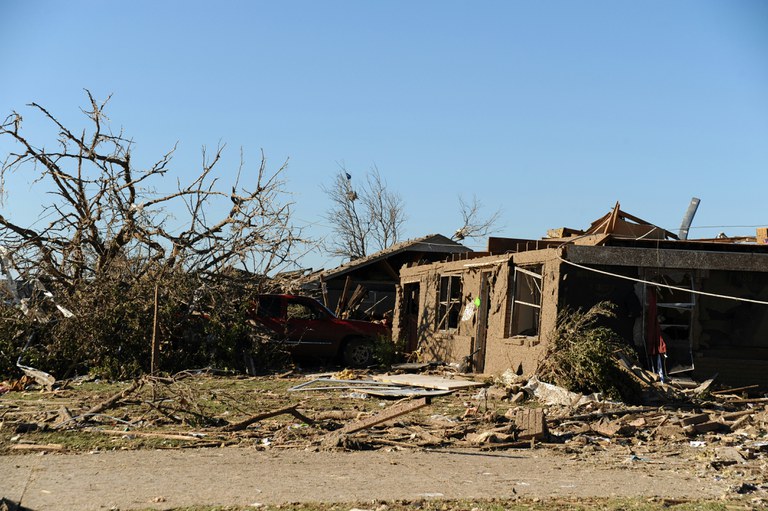
The disaster, which emanated from an extreme weather event, left several residents of the Qumbu district in the Eastern Cape Province without shelter. By failing to act, the two municipalities not only failed to ensure the fulfilment of human rights (such as housing, dignity, and privacy) but also failed to live up to their constitutional obligations relating to cooperative governance.
Background to the case
An extreme weather event involving heavy rains and high winds occurred on 8 February 2022 in the Qumbu, destroying and damaging several rural homes. As a result, many residents were left without access to adequate housing. Twenty-nine residents of the district, many of whom are vulnerable, approached the Mhlontlo Local Municipality, the OR Tambo District Municipality and the Provincial Department of Human Settlements seeking temporary emergency shelter.
Following the Local Municipality’s inaction, the residents approached the High Court, pleading for a declaration that the Municipality’s conduct was unlawful and unconstitutional, and further seeking an order directing the Municipality to provide temporary shelter. In the High Court, the Local Municipality argued that no disaster had occurred in its jurisdiction on 8 February 2022. The Municipality further contended that it could not act in the absence of a formal declaration of a disaster in terms of the Disaster Management Act. It was also submitted that there were no legislative obligations requiring the Municipality to provide temporary emergency shelter. Lastly, the Municipality argued that before the residents could challenge the municipality’s decision in terms of the Promotion of Administrative Justice Act (PAJA), they had to exhaust internal remedies, which they failed to do.
The OR Tambo District Municipality and the Provincial Department claimed they had no case to answer. The former argued that it lacked the competency to provide housing, while the latter claimed it was unaware of the disaster as it had received no communication to that effect from the Local Municipality. Having decided that the case ought to be dealt with under PAJA, the High Court rejected the residents' plea. The court based its decision on the fact that the applicants had failed to exhaust the municipality’s internal dispute resolution processes and prove that a disaster had indeed occurred. The court also ruled that the applicants had failed to make a case against the District Municipality and the Provincial Department. Their application for leave to appeal at the Supreme Court of Appeal was subsequently dismissed. Unsatisfied with this outcome, the residents approached the Constitutional Court.
Arguments
The residents submitted that the disaster of 8 February 2022 rendered them homeless. They further argued that the failure of the Local Municipality, District Municipality, and the Provincial Department to provide emergency shelter infringed upon their human rights, including the rights to housing, dignity, and privacy. This failure was twofold: first, it was a failure to comply with obligations imposed by Section 54 of the Disaster Management Act; and second, a failure to cooperate with one another as envisaged by Section 41 of the Constitution.
Conversely, the Local Municipality contended that no disaster had occurred in the first place. Second, they maintained that without a formal declaration of a disaster under the Disaster Management Act, they could not act. They also argued that even if a disaster had destroyed the residents’ houses, the responsibility for reconstructing the houses lies with the national and provincial governments. Lastly, the Local Municipality reiterated that the residents should have exhausted internal remedies before approaching the court.
The Provincial Department maintained that it had no case to answer, contending it was unaware of the disaster and could only act once informed by the Municipality. The District Municipality also absolved itself of responsibility, supporting the Local Municipality’s claim that there was no evidence to suggest that there was a disaster and that action was impossible without a formal declaration of a disaster. The District Municipality further maintained that it had no competency over housing and argued that the case was essentially about the Local Municipality’s failure to provide assistance to the residents.
Judgment
The Constitutional Court had to determine several issues. For the purposes of this article, the main substantive issue was whether the local and district municipalities failed to fulfil their respective legal obligations and, in the process, infringed on the residents’ constitutional rights, including the rights to dignity and temporary emergency shelter.
The Constitutional Court ruled that the appeal should succeed because the matter was of significant constitutional importance. It pertains to human rights as well as the responsibilities of organs of state under the Constitution, the Disaster Management Act, the Housing Act, and the National Housing Code (NHC). Turning to the substantive issue, the Court found that the matter related primarily to the application of the Disaster Management Act and was not a review application under PAJA, as mischaracterised by the High Court.
Having analysed the evidence before it, the Court concluded that indeed a disaster occurred on 8 February 2022. It found that the Local Municipality, the District Municipality, and the Provincial Department had all been informed of the weather event and its impact. The Court was also satisfied that the events fell within the definition of a “disaster” as defined in Section 1 of the Disaster Management Act. The Court noted that the residents were unable to cope with the effects of the disaster because they lacked the resources to construct temporary shelter on their own.
Regarding whether a formal declaration is required before a municipality can act, the Court disagreed with the High Court. It reasoned that the absence of a declaration under Section 55(2) of the Disaster Management Act does not mean a municipality has no role to play; it simply means the municipality must act within its usual powers and responsibilities relating to disaster management.
The Court ruled that the municipalities and the provincial department had ignored legislative provisions and available policy tools. They failed to investigate the disaster and render support under the Disaster Management Act, the Housing Act, and the NHC. The required support included providing accommodation in community halls or tents, for example. In the words of the Constitutional Court-
“[t]his case is about an apparent unwillingness on the part of the [municipalities] to protect the most vulnerable amongst us and the lower courts’ failures to require the [municipalities] to give expression to the willingness required in the new legal order. Every link in the chain appears to have failed the victims of a weather event in one of the poorest parts of our country” [para 6].
The Court castigated the state’s failure to treat the residents in a dignified and supportive way, comparing its behaviour to the apartheid state’s treatment of people in the former "homelands."
On cooperative governance, the Court ruled that the primary responsibility to manage disasters lies with the District Municipality unless a specific agreement exists for the Local Municipality to be the primary responder. As no such agreement existed in this case, the District Municipality should have led the government’s efforts to address the plight of the residents. However, neither the Local Municipality nor the Provincial Department was absolved. Cooperative governance requires all three spheres of government to work closely together. Instead, the municipalities and the provincial department “adopted a well-known and unacceptable technique of deny, divert and deflect to resist the [residents]’s claims” [para 116].
Ultimately, the Court declared the failure of the municipalities to act unlawful, unconstitutional, and contrary to the principles of cooperative governance. The Court set aside the High Court’s decision and referred the dispute regarding the provision of emergency shelter back to the High Court for determination.
Commentary
This case is significant for three reasons. First, it clarifies the role of municipalities regarding disaster management; as the sphere of government closest to the people, they cannot "fold their arms" and absolve themselves of responsibility when a disaster strikes. Second, the judgment clarifies that a formal declaration of a disaster is not a prerequisite for municipal support. Such a declaration merely grants a municipality extraordinary power; it does not negate its existing duties. Finally, the judgment emphasizes that the principles of cooperative governance must become a reality to ensure the well-being of the people.