
 Article 40 Volume 10 Number 2 - July 2008
 Article 40 Volume 10 Number 2 - July 2008
Còte d’Ivoire: challenges and pending questions a year after Ougadougou
Article 40 Volume 10 Number 2 - July 2008
Còte d’Ivoire: challenges and pending questions a year after Ougadougou
This paper explores the progress and challenges for the positive advance of the peace process in Côte d’Ivoire.
Foundation for Human Rights Initiatives v Attorney-General (2008) AHRLR 235 (UgCC 2008)
This petition is brought by a non governmental organization (NGO) known as the Foundation for Human Rights Initiatives whose objectives include protection, promotion and observance of human rights. The petitioner asserts that: (a) Certain provisions of the Trial on Indictments Act (CAP 23) impose restrictions, and limitations on the person’s right to liberty, freedom of movement, the right to a fair and speedy trial and the presumption of innocence (b) Provisions of the Magistrate’s Courts Act (CAP 16) are inconsistent with articles 20, 23(1), 23(6), 28(1) and 28(3) of the Constitution of the Republic of Uganda insofar as they exclude certain offences from the grant of bail, thereby infringing on the constitutional right to liberty, the right to a fair and speedy trial, and the right to bail. (c) The Uganda Peoples Defence Forces Act 7 of 2005 (UPDF) which subjects accused persons to lengthy periods of detention bail, is inconsistent with articles 20, 23(6), 28(1), and 28(3) of the Constitution of the Republic of Uganda and as such violate the inherent rights and freedoms of the individual which are guaranteed by the said Constitution (d) The Police Act (CAP 303), section 25(2), which permits the police to detain a suspect for seven days without being charged in a court of law is inconsistent with article 23(4) of the Constitution and is an infringement of the right to liberty and the presumption of innocence.
30 Days/Dae/Izinsuku July 2008
South African media reports on the following: Prison officials investigated for tender fraud scandal; Pan Africanist Congress suspected of taking bribes from prisoners to facilitate pardons; Child Justice Bill promoting non-custodial punishments tabled in Parliament; Awaiting-trial prisoners account for prison overcrowding - at over 300% in some facilities; Fears of a strike rise over pay deal delay; And many articles on other African countries.
Manneh v The Gambia (2008) AHRLR 171 (ECOWAS 2008)
"..The Plaintiff was arrested by two officials of the National Intelligence Agency of The Gambia at the Daily Observer’s premises in Banjul on 11 July 2006 without any warrant of arrest ... The Court holds these acts clearly violate the provisions of articles 2, 6 and 7(1) of the African Charter on Human and Peoples’ Rights. Furthermore, in view of the fact that these violations of applicant’s human rights were caused by the defendant, which refused to appear in Court, it entitles the applicant to damages. And the Court considers that this violation should be terminated and the dignity of the applicant’s person is to be restored..."
Occupiers of 51 Olivia Road & Others v City of Johannesburg & Others Case CCT 24/07 [2008]
Knowing & claiming your right to food, 2nd. edition - isiXhosa
 Knowing & claiming your right to food, 2nd. edition - Afrikaans
 Evictions in South Africa: Relevant International and National Standards
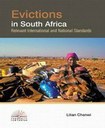
Forced evictions threaten a range of human rights. These include the rights to human dignity, security of the person, privacy, health, access to adequate housing, education and life, as well as freedom of movement and freedom to choose one’s residence.
ESR Review Volume 9 No 2 - June 2008
 Pertinent social security issues in South Africa
Socio-Economic Rights Project Research Series 4, 2008 This research paper, by Letlhokwa George Mpedi, provides some perspectives on the South African social security system, including the South African Social Security Agency. The paper first analyses the social and political context of poverty in South Africa. It then proceeds with a theoretical discussion of the concepts of social security and comprehensive social protection. This is followed by an exploration of the South African social security framework - the legal, institutional and administrative framework, the scope of social security coverage, and social security adjudication and enforcement. Finally, the paper identifies gaps and challenges within the social security system, assesses the opportunities for developing a comprehensive social security system in South Africa, and provides some recommendations as to how the social security system might be improved. Download the Socio-Economic Rights Project Research Series 4, 2008
Guide to the UN Convention against Torture in South Africa
"This publication aims to provide guidance on how the UN Convention against Torture and Cruel, Inhuman and Degrading Treatment or Punishment (CAT) can be used as a resource in South Africa to eradicate torture and ill-treatment...This prohibition of torture imposes on states obligations which are owed to all other members of the international community; each of these obligations has a correlative right. It signals to all states and to the people under their authority that 'the prohibition of torture is an absolute value from which nobody must deviate.' At the national level it de-legitimates any law, administrative or judicial act authorising torture."
30 Days/Dae/Izinsuku June 2008
The media articles report on the following topics: awaiting trial prisoners; prison overcrowding; sentencing and parole; prisoner's rights; security and escapes; and rehabilitation.
Article 40 Volume 10 Number 1 - May 2008
 Submission by CSPRI to the Portfolio Committee on Social Development on the Prevention of and Treatment for Substance Abuse Bill [B12-2008]
This submission focuses on the prevention and combating of torture, cruel, inhuman or degrading treatment within the context of the Prevention of and Treatment for Substance Abuse Bill [B12- 2008]. The overall objective is to promote the use of two international instruments (UNCAT and OPCAT) and, more specifically, to assist in creating the enabling legislation to give effect to section 12 of the Constitution.
You are the “weakest link” in realising socio-economic rights: Goodbye - Strategies for effective implementation of court orders in South Africa
Socio-Economic Rights Project Research Series 3, 2008 This research paper by Christopher Mbazira reviews a number of socio-economic rights judgments and discusses the extent to which the orders granted in those cases have been complied with. It also sketches the courts’ approach to interpreting the substance of socio-economic rights. The paper goes on to suggest the best strategies for implementing court orders in socio-economic rights cases. In other words, saying goodbye to the “weakest link” in socio-economic rights litigation. Download the Socio-Economic Rights Project Research Series 3, 2008
Struggle to survive: HIV/AIDS and prisoners' rights in Namibia
This report by the Legal Assistance Centre considers HIV/AIDS in prisons, including pre-trial detention.
30 Days/Dae/Izinsuku May 2008
The media reports in this issue include: Lawyer reminds court of appalling prison conditions; Awaiting-trial prisoner admitted to a private clinic after assault; Police officer to stand trial for allegedly interfering with evidence of parolee's breach of parole conditions; Department ordered to reinstate karate training in prison; Bail law is not the problem, researcher reminds ANC President; Judge optimistic that juvenile offender will be rehabilitated after 8 years.
CSPRI Newsletter No. 26 - May 2008
This newsletter focusses almost exclusively on the prevalence of HIV in South Africa's prison system. This article is written by CSPRI's co-ordinator, Lukas Muntingh.
Local Government Project - Redefining the Political Structure of District municipalities
Outside the eight metropolitan municipalities, South Africa's local government system comprises two tiers, namely district and local municipalities. Even where the context suggests that there is potential for the district system to work in rural areas, the instances of success are limited. A key problem is the often dysfunctional relationship between district councils and local councils. This 2008 paper explores options for the restructuring of the political structure of district municipalities.
Submission to the South African Portfolio Committee on Justice and Constitutional Development on the Criminal Law (Sentencing) Amendment Bill [B15-2007]
This submission is made to the South African Portfolio Committee on Justice and Constitutional Development and addresses the Criminal Law (Sentencing) Amendment Bill [B15 of 2007]
30 Days/Dae/Izinsuku April 2008
Media reports in this issue include: Police officer allegedly tampered with Yengeni's blood sample; Torture in South Africa prisons remains a challenge, Human Rights Commission chief; Department to investigate the cause of prison gang violence; Prisoners awaiting trial for years because of lack of enough judges; Prisoner's relative suggests correctional supervision instead of imprisonment; Five new prisons will cost a lot more than estimated; Department discovers escape of internationally wanted criminal after 8 days.
Judicial Inspectorate for Correctional Services Annual Report 2007-2008.pdf
ESR Review Volume 9 No 1 - March 2008
 Submission on South Africa's DCS Budget Vote 2008/09
This submission was made in response to South Africa's Department of Correctional Services tabling of its 2008/09 budget. It addressed the size of the prison population, the seven-day establishment, the PPPs, and the implementation of the White Paper on Corrections.
30 Days/Dae/Izinsuku March 2008
Media reports in this issue include: Prisoners to be monitored electronically; Younger offenders should be sent for correctional supervision; Human Rights Commission criticises death penalty move; Awaiting-trial prisoner's lawyer unhappy with the postponement of client's trial; Awaiting-trial prisoners escape from a police van; Bill could reduce the age of babies living with imprisoned mothers; Department and Portfolio Committee disagree on private prisons; Department of Correctional Services recovers 22 million rand; Department of Correctional Services ordered to reinstate fired warder; Correctional Services Portfolio Committee chairperson says prisoners should be stripped of privileges; and many more newspaper articles on prison-related issues.
CSPRI Newsletter No. 25 - March 2008
This newsletter looks at the Department of Correctional Services' (DCS) Medium Term Expenditure Estimates focussing on five issues: The cost drivers and priorities in the budget; The real and nominal trends in the budget; The internal distribution of the budget between DCS programmes; The prison construction programme; Budget trends and the White Paper on Corrections; and The budget in relation to other budgets in the crime and security cluster.
Report of the Working Group on Arbitrary Detention: Mission to Equatorial Guinea
"The report also notes the excessive power of the armed forces which effectively control the prisons, carry out arrests, and exercise military jurisdiction over civilians. Secret detentions and the abduction of opposition politicians in neighbouring countries are of particular concern. The report describes cases of people detained for merely exercising their political rights; it looks into the detention of illegal immigrants at police stations, notes the absence of effective defence rights and limitations on legal aid, refers to the physical conditions of detention as a contributing factor to the lack of adequate defence and cites the lack of an effective registration system at prisons and police stations."
Strangulation of Local Government
This paper argues that the sheer volume, style, nature and scope of the legislative framework for local government impedes the achievement of local government’s developmental mandate. The legal regime is impeding two key values of decentralisation, namely that municipalities are best placed to gauge community needs and secondly, that they should be sites of innovation and creativity in formulating localised responses to meeting those needs. It is argued that the current plethora of laws may be guilty of strangulating local government, preventing it from executing its developmental mandate.
Religion, law and human rights in post-conflict Liberia
This article was published in AHRLJ Volume 8 No 2 2008. Liberia has had a turbulent recent history, and today deals with extreme poverty, high crime, ethnic tensions, widespread impunity and corruption. In addition to this, there is a complex and contradictory relationship between law and religion, which further complicates the ongoing efforts towards peace building and reconstruction. This paper aims to highlight the fundamental question of whether certain laws and human rights — in this case, religious or cultural freedom — can or should be actively promoted by the state and by society in such a unique scenario as fragile, post-conflict Liberia. The paper first addresses this question with respect to the country's contradictory dual-justice system, highlighting the problems that arise when the weak state struggles to enforce statutory and human rights law, while much of the population still sees legitimate justice to be rooted in traditional mechanisms, such as trials by ordeal, which oppose these laws. The second section of the paper considers the extent to which all Liberians enjoy religious freedom. It is shown that, while Liberia is de facto a secular state, it is essentially de jure a Christian country. Although there are historically and presently few indications of unrest based strictly on religion, it is argued that there is underlying religious tension that makes it dangerous for the state or society to suggest any major integration of Islam into public life. Some of this tension can be attributed to the growing number of Pentecostal and charismatic churches, which are especially vocal about the encroachment of non-Christians. However, because of Liberia's fragility, it might be the case that promoting religious equality and actively eliminating the Christian bias might cause more harm than good in Liberia today.