
The NPA is perhaps one of the most unaccountable institutions of state. While the decision to prosecute is reviewed by a court, the decision not to prosecute is taken in secrecy and it is this decision, not to prosecute, that is perhaps even more important than the decision to prosecute.
News
The Detention Justice Forum (DJF) released a statement in response to the findings of the Judicial Inspectorate for Correctional Service on solitary confinement in South African prisons.
The Detention Justice Forum (DJF) released a statement in response to the findings of the Judicial Inspectorate for Correctional Service on solitary confinement in South African prisons.
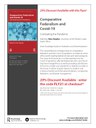
This comprehensive scholarly book on comparative federalism and the Covid-19 pandemic is written by some of the world’s leading federal scholars and national experts.
We would like to announce that the Dullah Omar Institute at the University of the Western Cape will be closed over the festive season from 15 December 2021 to 16 January 2022

The Dullah Omar Institute is deeply concerned about the arrest of Prof Assefa Fiseha, a staff member and former director of the Centre of Federal and Governance Studies at Addis Ababa University.
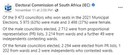
Turning the lens on gender in the local government elections, an analysis of elected candidates shows that the only space where women led was in voter registration numbers. Post-election, the Independent Electoral Commission (IEC) has revealed that while more women than men registered to vote in every province, female councillors only made up 37% of elected councillors.
It should not be necessary for civil society or political parties to take the National Prosecuting Authority’s decisions on review in court — an expensive, cumbersome and slow method of holding the institution to account and ensuring that corrective action is taken.
The following articles/publications are available in this issue:
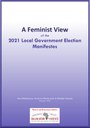
28 October 2021 – On Monday, 01 November 2021, South Africans will head to the polls to vote in the local elections, with each political party – through their party manifestos – promising action plans to improve governance and solve social ills in communities. But how do these plans and promises hold up when analysed through a feminist lens to improve the intersectional and lived realities of women?
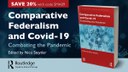
This comprehensive scholarly book on comparative federalism and the Covid-19 pandemic is written by some of the world’s leading federal scholars and national experts.
The NPA’s reputation has suffered much damage in the past 10 years. There is ample evidence that there exists more than the possibility of interference in its independence and operation, and that this has had adverse consequences for its perceived independence.