Esta folha informativa discute o policiamento democrático como significando: (1) a obediência da Polícia ao Estado de Direito, (2) a responsabilização da Polícia, e (3) a justiça processual por parte da Polícia ao serviço do público. Nove dimensões necessárias ao policiamento democrático são identificadas, sendo que o resultado final pretendido é a confiança pública na Polícia, algo que resulta da sua legitimidade. O quadro conceptual apresentado não se destina apenas a descrever o policiamento democrático, mas também a orientar o planeamento estratégico nas organizações policiais, incluindo a Polícia da República de Moçambique (PRM).
This submission considers a selection of the provisions of the draft SAPS Bill 2020 affecting local and provincial government.
This submission deals with two issues (1) Coordination across the criminal justice system (2) Priorities for reform in SAPS as they pertain to the draft SAPS Amendment Bill 2020.
Statement in response to the activity report of the Special Rapporteur on Prisons, Conditions of Detention and Policing in Africa at 67th Ordinary Session of the African Commission on Human and Peoples’ Rights 13 November – 3 December 2020
AGENDA: Africa Criminal Justice Reform will participate in the Regional Conference on the Decriminalisation of Petty Offences in Africa Policing Pandemics, Balancing Rights 14 - 16 September 2020 12h00 – 14h30 GMT
AGENDA: Africa Criminal Justice Reform will be participating in the Regional Conference on the Decriminalisation of Petty Offences in Africa: Policing Pandemics, Balancing Rights 14 - 16 September 2020 12h00 – 14h30 GMT
This report presents an analysis of major issues relating to the 2020-2021 municipal budget consultation process.
Following from previous work, this report looks at seven areas of reform for the National Prosecuting Authority (NPA). By its own admission the NPA is facing a long list of challenges, internally and externally. This report proposes seven areas of reform that can over the short to medium term, if followed, make a substantial and constructive contribution to rebuilding trust in the NPA. The seven areas are: • the appointment of the NDPP and other senior officials • the dismissal of the NDPP • the prosecution policy directives • referrals from other agencies • informal mediation • structuring the clusters of the NPA • general oversight. An unavoidable conclusion is that law reform is needed since the current legal framework enabled the hollowing-out and misuse of the NPA. Report by Lukas Muntingh and Jean Redpath
ACJR Submission to the Western Cape Provincial Police Ombudsman: Quality of victim support services and democratic policing | April 2020
ACJR Submission to the City of Cape Town: Proposed by-law amendments | May 2020
ACJR Submission to the National Council of Provinces Select Committee on Security and Justice on the Judicial Matters Amendment Bill B13B OF 2019 | July 2020
ACJR Submission to the Portfolio Committee on Justice and Correctional Services on the Judicial Matters Amendment Bill B13 of 2019 | November 2019.
ACJR Submission on Criminal Matters Amendment Bill 2020 | April 2020
The report evaluates the human rights consequences of the pandemic and the government palliatives.
Municipalities procure goods and services from private entities almost daily. These goods and services are often essential for ensuring the provision of basic amenities such as water, sanitation, electricity, and refuse removal.
This submission follows two previous substantive communications relating to the functioning of the legislatures during the national disaster that were sent on 25 March 2020 and on 10 April 2020. These communications, the substantive issues raised, and our offers to support Parliament in its efforts to operate as a public forum serving the interests of the people of South Africa, have been met with silence from your respective offices. What follows is an assessment of how we have experienced the recent efforts of the National Parliament in migrating to full time virtual meetings, and proposals for enhancements in the mechanisms to be used to ensure that no citizen is left behind.
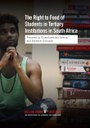
In furtherance of its Access to Food for Students' Project, the Socio-Economic Rights Project at the Dullah Omar Institute recently released a booklet on The Right to Food of Students in Tertiary Institutions in South Africa. The Access to Food for Students' Project forms a part of the Governance programme at the Centre of Excellence in Food Security (CoE- FS)
The first of a series of webinars on local government and COVID-19, hosted by the Dullah Omar Institute and the International Budget Partnership, took place on 04 June 2020, in partnership with the South African Local Government Association. The webinars aim to promote best practices pertaining to transparency and responsiveness in local government during the era of COVID-19.
Africa Criminal Justice Reform (ACJR) will facilitate a webinar discussion on COVID-19 and petty offences and its impact on marginalized groups in Ghana, Sierra Leone, Nigeria and Guinea Conakry. Governments across Africa have put measures as a response to the COVID-19 global pandemic, through the establishment of either states of emergencies or states of disasters. While these and other additional measures are a response to the crisis, the enforcement of lockdown regulations has also created new sets of petty offences which previously did not exist. The poor and marginalized are worst impacted as many have been forced to breach the rules and regulations for the purposes of survival. Members of the campaign on the Decriminalisation of Petty Offences in Africa will have a general discussion on the COVID-19 regulations in their respective countries, addressing the impact thereof on persons (including vulnerable groups such as women and girls) and highlighting their organizational efforts and recommendations to addressing an appropriate response to dealing with the pandemic. Panelists will include representatives from South Africa, Ghana, Sierra Leone, Nigeria and Guinea Conakry. Date: Thursday, 4th June 2020 Time: 11:00am (GMT) 12:00pm (WAT) 13:00pm (SAST) Register in advance for this meeting on Zoom: https://uwc.zoom.us/meeting/register/tJctfuChrD8iHt2fRX3H2m8jRCIlRed-00G2 After registering, you will receive a confirmation email containing information about joining the meeting.
A municipality’s Integrated Development Plan is a five-year strategic plan, where the many interests, wishes and preferences of a municipal community are mediated and put into action. The municipality’s budget allocates resources to this plan. Each year, municipalities review their IDPs and pass a budget for their financial year, which runs from 1 July to 30 June.
Updated Infosheet 1 on the criminal justice system following recent regulations issued.
This Infosheet deals with the deployment of the South African National Defence Force (SANDF) to assist in the implementation of the COVID-19 lockdown.
This fact sheet deals with arrest without a warrant in Malawi. Currently in Malawi there remain laws on the statutes that have not been tested against constitutional requirements resulting in all likelihood in arrests that are not compliant with the Constitution.
This fact sheet focuses on arrest without a warrant in Kenya. Currently in Kenya the situation has been complicated by the legislative powers granted to the counties and some have used this opportunity to expand policing powers.
This information sheet sets out the provisions per regulation concerning the functioning of the criminal justice system under the COVID-19 lock-down. Some items still require clarification and will be updated as needed.

 Folha Informativa 15 (Port.): Policiamento Democrático: Um Quadro Conceptual