

The following articles are available in this issue:
The following articles are available in this issue:
![[Call for Applications] LLM/MPhil in Multilevel Government & Local Government - 2026 intake](https://dullahomarinstitute.org.za/news/call-for-applications-llm-mphil-in-multilevel-government-local-government-2026-intake/@@images/c64d38ac-53cc-41ef-b40b-632aa2393863.jpeg "[Call for Applications] LLM/MPhil in Multilevel Government & Local Government - 2026 intake")
This one-year Masters Course equips students to understand how South African provinces and local government work, how the multilevel system of government compares to other countries on the continent and on what global theories and practices it is based.
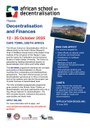
Attention municipal practitioners and scholars across Africa: The African School on Decentralisation has extended its application deadline to 13 June 2025.
The Socio-Economic Rights Project at the Dullah Omar Institute hosted a webinar to raise awareness and foster dialogue on the pressing issue of obstetric violence (OV) in Africa. Drawing from extensive research and cross-country experiences, the event aimed to unpack the definitions, manifestations, and structural drivers of OV, situate it within applicable human rights frameworks, and reflect on the use of litigation as a strategy for accountability and change. The webinar also sought to generate recommendations for advancing respectful maternity care and strengthening legal and institutional responses across the continent.

We are proud to announce that Professor Jaap de Visser, a leading authority on multilevel government and constitutional law, has been appointed as a Non-Resident Fellow at the Forum of Federations.
The following articles are available in this issue:
![[Call for Applications] Postgraduate Diploma in Public Law focusing on Local Government](https://dullahomarinstitute.org.za/news/call-for-applications-postgraduate-diploma-in-public-law-focusing-on-local-government-1/@@images/5eb45337-63df-4f44-8469-f16292962160.png "[Call for Applications] Postgraduate Diploma in Public Law focusing on Local Government")
Shape the Future of Local Government!
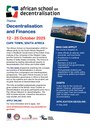
The theme for the Fifth African School on Decentralisation (ASD) is ‘Decentralisation and Finances’. The 2025 ASD will focus on how decentralisation governance in Africa is financed, and on the systems and rules for the prudent use of public finances at decentralised level.

The following articles are available in this issue:

We are proud to announce that Professor Jaap de Visser has been selected as one of the Top 25 Thinkers in Local Government by the LGIU (Local Government Information Unit).

The Postgraduate Diploma (PG Dip) is a unique programme, aimed at practitioners. It will equip you with knowledge of the South African local government system, and with skills to apply this knowledge in practice.

The following articles are available in this issue:
![[Call for Applications] Paralegals Online Course (11-29 November 2024)](https://dullahomarinstitute.org.za/news/call-for-applications-paralegals-online-course-11-29-november-2024/@@images/ee039cd8-302d-4620-9588-8de039e94d2a.png "[Call for Applications] Paralegals Online Course (11-29 November 2024)")
Registration for the Paralegals Online Course from 11 to 29 November 2024
![ISLA's side events at the 81st Ordinary Session of the African Commission on Human and Peoples’ Rights (ACHPR) [13 - 23 October 2024]](https://dullahomarinstitute.org.za/news/islas-side-events-at-the-81st-ordinary-session-of-the-african-commission-on-human-and-peoples2019-rights-achpr-13-23-october-2024/@@images/8339846d-b9ba-4011-9b2f-b144698da16c.jpeg "ISLA's side events at the 81st Ordinary Session of the African Commission on Human and Peoples’ Rights (ACHPR) [13 - 23 October 2024]")
Join us at our partner, the Initiative for Strategic Litigation in Africa (ISLA), for their side events during the 81st Session of the African Commission on Human and Peoples' Rights (ACHPR).

The following articles are available in this issue:
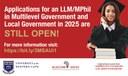
This one-year Masters Course equips students to understand how South African provinces and local government work, how the multilevel system of government compares to other countries on the continent and on what global theories and practices it is based.
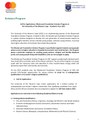
"The University of the Western Cape (UWC) is an implementing partner of the Mastercard Foundation Scholars Programme. Initiated in 2012, the Programme is a global initiative designed to develop the next generation of transformative leaders by enabling highly talented, service-oriented young people, primarily young Africans, to pursue their higher education and cultivate their leadership potential."
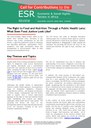
The Socio-Economic Rights Project (SERP) at the Dullah Omar Institute (DOI), University of the Western Cape invites contributions for the ESR Review, a quarterly publication aimed at informing and educating politicians, policymakers, non-governmental organisations (NGOs), academics, and legal practitioners about key developments in socio-economic rights at both national and international levels.
Socio-Economic Rights Project (SERP) at the Dullah Omar Institute (DOI), University of the Western Cape invites contributions for the ESR Review, a quarterly publication aimed at informing and educating politicians, policymakers, non-governmental organisations (NGOs), academics, and legal practitioners about key developments in socioeconomic rights at both national and international levels.

Mr Curtly Stevens and Dr Johandri Wright participated at the 10th International Comparative Urban Law Conference in London that was held during 18, 19 and 20 July 2024. The conference was hosted by the Fordham Urban Law Centre.
On 30 July 2024, the Dullah Omar Institute in partnership with the Hanns Seidel Foundation hosted a webinar on "Revisiting Coalitions: Impact of the GNU on Governance, Intergovernmental Relations and Local Government".
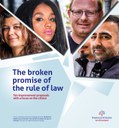
On 10 June 2024, the Netherlands State Commission on the Rule of Law, chaired by Prof Henk Kummeling (Extraordinary Professor at the Dullah Omar Institute) released its findings in a report titled “The Broken Promise of the Rule of Law”.
The Dullah Omar Institute for Constitutional Law, Governance and Human Rights at the Faculty of Law (DOI), University of the Western Cape (UWC), is pleased to announce two one-year full-time post-doctoral fellowships (PDRFs) for 2024-2025. One post-doctoral fellow will be based in the Children’s Rights Project (CRP) while the other will be based in the Africa Criminal Justice Reform Project (ACJR).
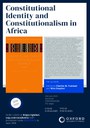
In its modern history, Africa has experienced different waves of constitutional ordering. The latest democratisation wave, which began in the 1990s, has set the stage over the past decade for what is now a hotly debated issue: do recent, new, or fundamentally revised constitutions truly reflect an African constitutional identity? Thoughtfully navigating a contested field, this volume brings to the fore a number of foundational questions about African constitutionalism.

The following articles are available in this issue:

Are you a local government practitioner, public servant, member of the legal profession, consultant or a member of a civil society organisation working in local government? This programme is for you!

The South African Research Chair in Multilevel Government, situated in the Dullah Omar Institute (DOI) at the University of the Western Cape (UWC), offers high quality Masters and PhD programmes in multilevel government and local government (Public Law).
The Socio-Economic Rights Project (SERP) at the Dullah Omar Institute (DOI), University of the Western Cape invites contributions for the ESR Review, a quarterly publication aimed at informing and educating politicians, policymakers, NGOs, academics, and legal practitioners about key developments in socio-economic rights at both national and international levels.
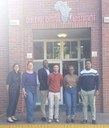
On Tuesday, 14 May, the Multilevel Government Team of the Dullah Omar Institute met the South African Human Rights Commission.
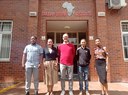
The Multilevel Government Project at the Dullah Omar Institute, hosted Lucia Radici on a three-month secondment stay.